


You rinsed, spit, smiled in the mirror, and one tooth looked faintly blue. Odd, a little alarming, and surprisingly common. At Carlyle Dental in Kinston, we see this a few times a month, and the explanation is usually simple.
Quick answer: blue or green mouthwash contains food dye. That dye clings to plaque, rough enamel and the edges of fillings or bonding. It is a surface stain, not damage, and it usually brushes or polishes right off.
What Actually Turns a Tooth Blue
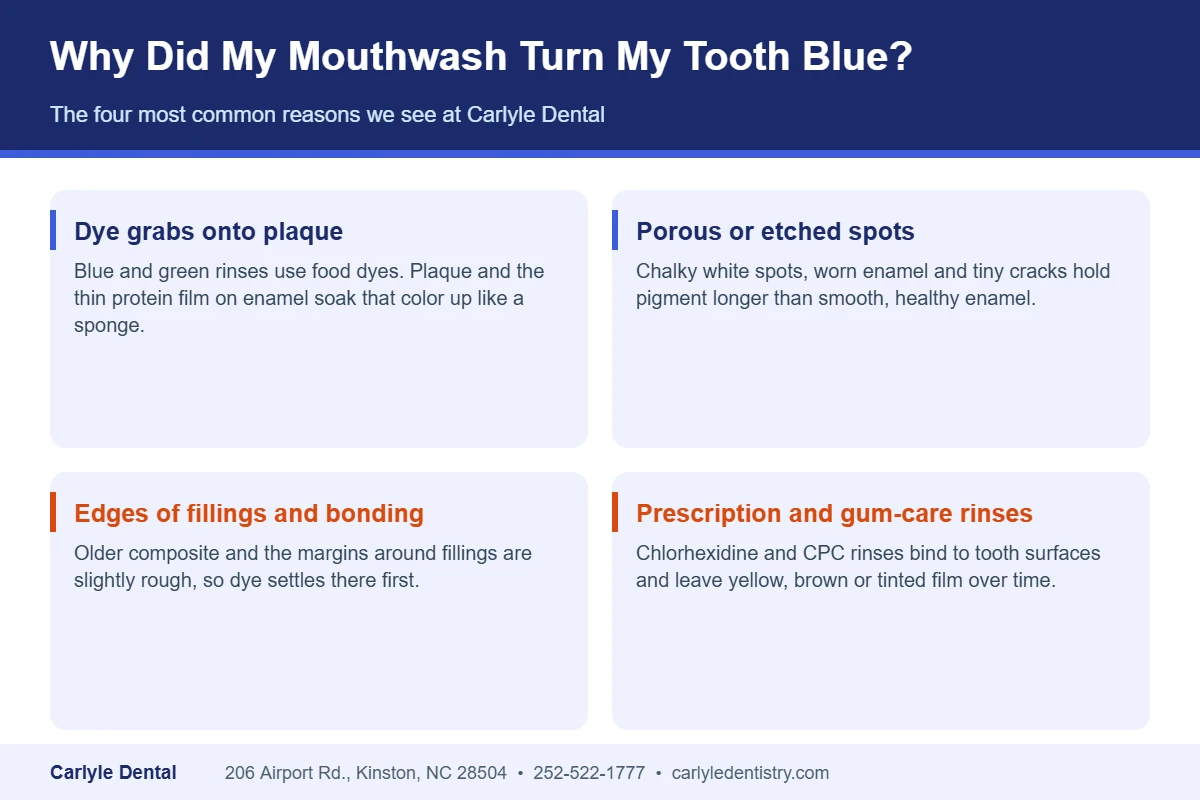
Healthy enamel is smooth and hard. Dye slides off it. Plaque is different. It is a soft, sticky film that absorbs color the same way a white T-shirt absorbs grape juice. So when one tooth turns blue and the others do not, that tooth usually has something the dye can grab.
Plaque Along the Gumline
This is the most common culprit by far. A thin blue line near the gums means plaque is sitting there. Dentists use disclosing tablets to stain plaque on purpose for exactly this reason. Your mouthwash just did it by accident.
Weak or Porous Enamel
Chalky white spots, early cavities and worn enamel are more porous than healthy tooth surface. Pigment soaks in and lingers. If the same spot keeps picking up color, have us take a look at it.
Old Bonding, Fillings and Veneers
Composite resin picks up stains over the years, especially around its edges. A blue-tinted margin around dental bonding or a tooth-colored filling often means the material is ready for a polish or replacement.
Which Mouthwash Ingredients Stain Teeth?
| Ingredient | Where you find it | Stain color | How stubborn? |
|---|---|---|---|
| Blue or green food dye | Many cool mint and gum-care rinses | Blue, teal, green | Low. Brushes off within days. |
| Chlorhexidine gluconate | Prescription rinses after gum treatment or surgery | Yellow to brown | Moderate. Needs a professional polish. |
| Cetylpyridinium chloride (CPC) | Over-the-counter antiplaque and gum rinses | Light brown | Moderate. Builds up with daily use. |
| Essential oils and alcohol | Classic amber antiseptic rinses | Rarely stains | Low. |
If you were prescribed chlorhexidine after periodontal therapy, keep using it as directed. The staining is cosmetic and temporary. The gum healing it supports is not.
How to Remove Mouthwash Stains From Your Teeth
Most blue stains disappear with better plaque control in about a week. Work through these in order:
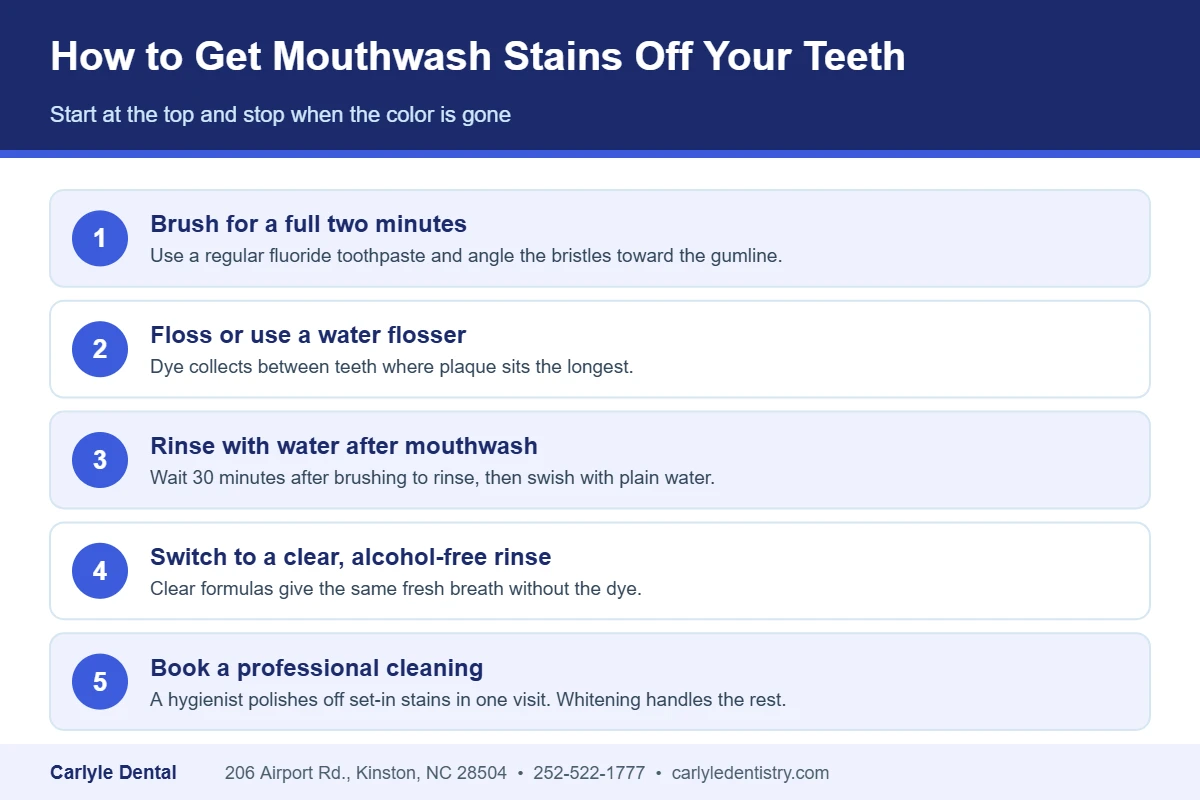
Still seeing color? Our hygienists remove set-in stains during a routine dental cleaning with a gentle polish. For overall brightness, Zoom whitening lifts deeper discoloration in a single visit.
When a Blue Tooth Is Not From Mouthwash
Here is the part most articles skip. A tooth that looks blue-gray from the inside, and does not brush off, usually has nothing to do with your rinse. It can mean:
- An old silver filling showing through thin enamel, which casts a gray-blue shadow.
- A nerve that is dying after an old injury, often on a front tooth. That needs an exam and sometimes root canal treatment.
- Intrinsic staining from childhood medications or trauma, which responds to porcelain veneers or bonding rather than polishing.
Our rule of thumb: if it wipes or brushes off, it is surface stain. If it seems to glow from inside the tooth, call us.
Choosing a Mouthwash That Will Not Stain
You do not have to give up mouthwash. Pick a clear, alcohol-free formula with fluoride, rinse with plain water afterward if you notice tinting, and keep up with brushing and flossing. Mouthwash freshens breath and adds fluoride. It does not replace removing plaque by hand.
Your Mouthwash Stain Questions, Answered
Can mouthwash stain your teeth?
Yes. Colored rinses can tint plaque and porous enamel, and medicated rinses with chlorhexidine or cetylpyridinium chloride (CPC) can leave yellow or brown film with regular use. Most of it is surface staining that brushing or a cleaning removes.
Is a blue mouthwash stain permanent?
Almost never. Dye from mouthwash sits on the surface of the tooth or in plaque. If good brushing does not lift it within a few days, a professional polish will.
Does Listerine stain teeth?
Original amber Listerine rarely stains, but the blue and green versions can tint plaque and rough spots. Rinsing with water afterward and brushing well prevents most of it.
Why does my gum-care mouthwash leave a blue residue?
Many gum-care rinses add blue dye for color. When the rinse meets plaque along the gumline, the dye clings to it. That ring of color is really a map of where plaque is building up.
Does chlorhexidine stain teeth permanently?
No. Chlorhexidine causes brown extrinsic staining, especially after several weeks of use, but your hygienist can polish it away. Do not stop a prescribed rinse early without asking your dentist.
How do I remove mouthwash stains from my teeth?
Brush for two full minutes, floss daily, rinse with water after mouthwash and switch to a clear formula. Stains that stay put come off with a professional dental cleaning.
Want that tint gone for good? Carlyle Dental cares for families from Kinston, Greenville, Goldsboro and Ayden. Book a cleaning or call 252-522-1777. No insurance? Ask about our Dental Gym membership plan.